Se Habla Español
Se Habla Español
Blog
You can still recover for a Palestine crash or fall that was partly your fault. Texas law bars recovery above 50% fault and otherwise cuts your award by your share, so 20% fault turns $20,000 in damages into $16,000.

You were hurt in Palestine, and now your days are full of appointments, pain, and calls from an insurance company. The first steps are simple: get medical care, get the crash report and other evidence, and say little to the other side’s insurer. After that, Texas law shapes your claim with a two-year deadline to file suit and a fault rule that bars recovery above 50%. This guide walks through each step and when a personal injury attorney who serves Palestine should take over.

What to Do in the First Days After an Injury

Your health comes first. See a doctor as soon as you can, and tell every provider how you were hurt. That way, the cause appears in your medical records. Those records connect the injury to the crash or fall, and the insurance company will read them closely.

Next, start a file. Keep these items together in one place:

  • Photos of the scene, the vehicles or the hazard that hurt you, and your injuries
  • Names and phone numbers of witnesses and anyone who stopped to help
  • The other driver’s name, insurance company, and policy number
  • Medical bills, pharmacy receipts, and a note of every workday you miss
  • Every letter, email, and claim number from any insurance company

A complete file answers the first questions an adjuster or a lawyer will ask, and it keeps small expenses from getting lost. If a car wreck caused your injury, our checklist for a car accident in Anderson County covers what to do at the scene.

Get the Crash Report and Save the Evidence

When an officer investigates a crash that injured someone, the officer must file a written report with the Texas Department of Transportation (TxDOT) within 10 days. Texas law lets any person involved in the crash get a copy for the statutory fee, and TxDOT adds a small charge for online orders. Once the report is on file, you can order a copy of the officer’s crash report directly from TxDOT.

Around Palestine, the investigating agency can be the Palestine Police Department, the Anderson County Sheriff’s Office, or the Texas Department of Public Safety, depending on where the crash happened. TxDOT keeps the written report. Dash camera video, field notes, and scene photos stay with the agency that worked the crash, so ask that agency in writing to keep them.

Wrecked vehicles are evidence too. Tell the tow yard and the insurance company, in writing, that you want the vehicle held until someone can inspect it. Some injuries happen away from the highway. If you fell in a store or a dog bit you, report it in writing to the business or property owner, photograph the hazard, and ask the owner to save any video.

After a Crash, Check Your Auto Policy Before Paying Bills

Before you pay a crash-related bill, pull out your auto policy. Texas requires every auto liability policy to include personal injury protection, known as PIP, unless a policyholder named on the policy, or that person’s spouse living in the same home, rejected it in writing.

Up to the limit in your policy, PIP pays reasonable medical expenses from the crash that you incur within three years, and it replaces lost income if you work. PIP pays without regard to who caused the crash. Texas law requires insurers to exclude PIP benefits for an injured person whose conduct contributed to the injury and either involved hurting himself or herself on purpose or happened while committing a felony or trying to elude police making a lawful stop or arrest.

PIP covers the named policyholder, members of the household, and any authorized driver or passenger in the insured car. Your policy can set a deadline, as early as six months after the crash, to give the insurer your original proof of loss, meaning the paperwork that documents your claim. Your policy may also require you to report the crash promptly, so read it this week. If the at-fault driver had no insurance or too little, the uninsured and underinsured motorist coverage on your policy can also pay, unless that coverage was rejected in writing.

Be Careful With the Other Driver’s Insurance Company

An adjuster for the other side may call within days of the crash. You have no contract with that company, a point the Texas Department of Insurance makes in its consumer guidance. You owe its adjuster no recorded statement, and you can decline to discuss the crash until you have legal advice. Our post on whether to give a recorded statement explains what to say if an adjuster calls.

A few rules keep those calls short:

  • Give your name and a way to reach you, and say nothing about how the crash happened.
  • Ask the adjuster to put every request in writing.
  • If the insurer denies your claim, ask for the reason in writing.
  • Do not sign a release, a medical authorization, or a settlement check until someone you trust has read it.

Attorney Chris Sbrusch spent the first two years of his career as an insurance defense lawyer, so he knows how adjusters use those early calls. Once you hire PINEYWOODS LAW™, we handle communication with the insurance companies for you.

Texas Rules That Decide What Your Claim Is Worth

Four Texas rules shape a Palestine injury claim from the start:

  • Shared fault reduces your recovery. Under Texas law on shared responsibility for an injury, you recover nothing if you are more than 50% responsible. At 50% or less, your damages drop by your percentage of fault, so $20,000 in damages becomes a $16,000 recovery if you are 20% at fault.
  • You have two years to file suit. Most Texas personal injury lawsuits must be filed within two years, and the law sets specific rules for the day the two years start, so have a lawyer calculate your deadline. For a child hurt in a crash or fall, the two years on the child’s own claim, such as for pain and suffering, do not start until the child turns 18. A parent’s claim for the child’s medical bills before age 18 does not get that extra time.
  • Claims involving a Texas government vehicle or property have a short notice deadline. Under the Texas Tort Claims Act, if a vehicle or property of the state or a local government, such as a city, county, or school district, was involved, the government is entitled to notice of your claim within six months after the incident. A city’s charter or ordinances can require notice much sooner, in some cities within 30 days. Missing the notice deadline does not necessarily end your claim, but you should speak with a lawyer immediately. Ask whether, during the six months following the crash, the government knew you were injured, knew who was involved, and was actually aware that it could be responsible for your injury in the manner you claim. This knowledge may take the place of formal notice, although a crash report or investigation alone usually falls short.
  • You can sue where you were hurt. Texas law generally lets you file an injury lawsuit in the county where all or a substantial part of the events behind the claim happened. For an injury in Palestine, that county is Anderson County, whose district clerk’s office is on North Church Street in Palestine.

Each rule has exceptions that a short article cannot cover. Our post on how fault is decided in a Texas car accident explains the evidence insurers look at.

When to Call a Personal Injury Attorney

Call a lawyer soon if any of these apply to you:

  • Your injury needs ongoing treatment or keeps you from working.
  • The other side says you caused the crash, or the fault is unclear.
  • A government vehicle, a commercial truck, or a business property was involved.
  • The insurer wants a recorded statement, a medical release, or a quick settlement.

Each of these situations makes a claim harder to handle alone. Call while the video, the vehicles, and the witnesses are still available. Chris Sbrusch was born in Anderson County and reopened PINEYWOODS LAW™ in Grapeland in 2019, between Palestine and Crockett, to serve both Anderson and Houston counties. He handles car accident claims, truck accidents, slip-and-fall injuries, and other injury cases across East Texas.

Frequently Asked Questions

Can I Still Recover If I Wasn’t Wearing a Seat Belt?

Not wearing a seat belt does not by itself end a Texas injury claim. But if the other side shows that not buckling up caused or added to your injuries, the jury can count that in your share of responsibility for your injuries. Your recovery then drops by your share, and you recover nothing if your share is more than 50%.

What Do I Need to Prove If I Fell in a Store or Business?

As a customer, you generally need to show at least four things: the business knew or should have known about the hazard, the hazard was unreasonably dangerous (an ordinary, everyday condition usually is not), the business did not use reasonable care to reduce or eliminate the risk, and that failure caused your injury. To show the business should have known, you need some evidence of how long the hazard was there before you fell. Our guide to premises liability in Texas explains more.

What Damages Can I Recover After an Injury in Texas?

You can seek money for financial losses, such as medical expenses, lost earnings, reduced ability to earn in the future, and property damage. You can also seek money for losses that are not financial, such as physical pain, mental anguish, physical impairment, and disfigurement. Past medical expenses are limited to what was actually paid or is owed for your care, which can be less than the amount billed. Injury claims against a Texas state or local government under the Texas Tort Claims Act have dollar caps.

Talk With PINEYWOODS LAW™ About Your Palestine Injury

If you were hurt in Palestine or anywhere in Anderson County, a conversation costs nothing. Consultations are free, and se habla español. No fees or expenses unless we recover for you. We can meet at your home, at the hospital, at our Grapeland office on U.S. Highway 287, or virtually. Contact PINEYWOODS LAW™ to talk through your claim.

By Christopher Sbrusch
C.E.O. & Attorney at Law
Injured in Palestine, TX? What to Know About Your Personal Injury Claim
You can still recover for a Palestine crash or fall that was partly your fault. Texas law bars recovery above 50% fault and otherwise cuts your award by your share, so 20% fault turns $20,000 in damages into $16,000.

You were hurt in Palestine, and now your days are full of appointments, pain, and calls from an insurance company. The first steps are simple: get medical care, get the crash report and other evidence, and say little to the other side’s insurer. After that, Texas law shapes your claim with a two-year deadline to file suit and a fault rule that bars recovery above 50%. This guide walks through each step and when a personal injury attorney who serves Palestine should take over.

What to Do in the First Days After an Injury

Your health comes first. See a doctor as soon as you can, and tell every provider how you were hurt. That way, the cause appears in your medical records. Those records connect the injury to the crash or fall, and the insurance company will read them closely.

Next, start a file. Keep these items together in one place:

  • Photos of the scene, the vehicles or the hazard that hurt you, and your injuries
  • Names and phone numbers of witnesses and anyone who stopped to help
  • The other driver’s name, insurance company, and policy number
  • Medical bills, pharmacy receipts, and a note of every workday you miss
  • Every letter, email, and claim number from any insurance company

A complete file answers the first questions an adjuster or a lawyer will ask, and it keeps small expenses from getting lost. If a car wreck caused your injury, our checklist for a car accident in Anderson County covers what to do at the scene.

Get the Crash Report and Save the Evidence

When an officer investigates a crash that injured someone, the officer must file a written report with the Texas Department of Transportation (TxDOT) within 10 days. Texas law lets any person involved in the crash get a copy for the statutory fee, and TxDOT adds a small charge for online orders. Once the report is on file, you can order a copy of the officer’s crash report directly from TxDOT.

Around Palestine, the investigating agency can be the Palestine Police Department, the Anderson County Sheriff’s Office, or the Texas Department of Public Safety, depending on where the crash happened. TxDOT keeps the written report. Dash camera video, field notes, and scene photos stay with the agency that worked the crash, so ask that agency in writing to keep them.

Wrecked vehicles are evidence too. Tell the tow yard and the insurance company, in writing, that you want the vehicle held until someone can inspect it. Some injuries happen away from the highway. If you fell in a store or a dog bit you, report it in writing to the business or property owner, photograph the hazard, and ask the owner to save any video.

After a Crash, Check Your Auto Policy Before Paying Bills

Before you pay a crash-related bill, pull out your auto policy. Texas requires every auto liability policy to include personal injury protection, known as PIP, unless a policyholder named on the policy, or that person’s spouse living in the same home, rejected it in writing.

Up to the limit in your policy, PIP pays reasonable medical expenses from the crash that you incur within three years, and it replaces lost income if you work. PIP pays without regard to who caused the crash. Texas law requires insurers to exclude PIP benefits for an injured person whose conduct contributed to the injury and either involved hurting himself or herself on purpose or happened while committing a felony or trying to elude police making a lawful stop or arrest.

PIP covers the named policyholder, members of the household, and any authorized driver or passenger in the insured car. Your policy can set a deadline, as early as six months after the crash, to give the insurer your original proof of loss, meaning the paperwork that documents your claim. Your policy may also require you to report the crash promptly, so read it this week. If the at-fault driver had no insurance or too little, the uninsured and underinsured motorist coverage on your policy can also pay, unless that coverage was rejected in writing.

Be Careful With the Other Driver’s Insurance Company

An adjuster for the other side may call within days of the crash. You have no contract with that company, a point the Texas Department of Insurance makes in its consumer guidance. You owe its adjuster no recorded statement, and you can decline to discuss the crash until you have legal advice. Our post on whether to give a recorded statement explains what to say if an adjuster calls.

A few rules keep those calls short:

  • Give your name and a way to reach you, and say nothing about how the crash happened.
  • Ask the adjuster to put every request in writing.
  • If the insurer denies your claim, ask for the reason in writing.
  • Do not sign a release, a medical authorization, or a settlement check until someone you trust has read it.

Attorney Chris Sbrusch spent the first two years of his career as an insurance defense lawyer, so he knows how adjusters use those early calls. Once you hire PINEYWOODS LAW™, we handle communication with the insurance companies for you.

Texas Rules That Decide What Your Claim Is Worth

Four Texas rules shape a Palestine injury claim from the start:

  • Shared fault reduces your recovery. Under Texas law on shared responsibility for an injury, you recover nothing if you are more than 50% responsible. At 50% or less, your damages drop by your percentage of fault, so $20,000 in damages becomes a $16,000 recovery if you are 20% at fault.
  • You have two years to file suit. Most Texas personal injury lawsuits must be filed within two years, and the law sets specific rules for the day the two years start, so have a lawyer calculate your deadline. For a child hurt in a crash or fall, the two years on the child’s own claim, such as for pain and suffering, do not start until the child turns 18. A parent’s claim for the child’s medical bills before age 18 does not get that extra time.
  • Claims involving a Texas government vehicle or property have a short notice deadline. Under the Texas Tort Claims Act, if a vehicle or property of the state or a local government, such as a city, county, or school district, was involved, the government is entitled to notice of your claim within six months after the incident. A city’s charter or ordinances can require notice much sooner, in some cities within 30 days. Missing the notice deadline does not necessarily end your claim, but you should speak with a lawyer immediately. Ask whether, during the six months following the crash, the government knew you were injured, knew who was involved, and was actually aware that it could be responsible for your injury in the manner you claim. This knowledge may take the place of formal notice, although a crash report or investigation alone usually falls short.
  • You can sue where you were hurt. Texas law generally lets you file an injury lawsuit in the county where all or a substantial part of the events behind the claim happened. For an injury in Palestine, that county is Anderson County, whose district clerk’s office is on North Church Street in Palestine.

Each rule has exceptions that a short article cannot cover. Our post on how fault is decided in a Texas car accident explains the evidence insurers look at.

When to Call a Personal Injury Attorney

Call a lawyer soon if any of these apply to you:

  • Your injury needs ongoing treatment or keeps you from working.
  • The other side says you caused the crash, or the fault is unclear.
  • A government vehicle, a commercial truck, or a business property was involved.
  • The insurer wants a recorded statement, a medical release, or a quick settlement.

Each of these situations makes a claim harder to handle alone. Call while the video, the vehicles, and the witnesses are still available. Chris Sbrusch was born in Anderson County and reopened PINEYWOODS LAW™ in Grapeland in 2019, between Palestine and Crockett, to serve both Anderson and Houston counties. He handles car accident claims, truck accidents, slip-and-fall injuries, and other injury cases across East Texas.

Frequently Asked Questions

Can I Still Recover If I Wasn’t Wearing a Seat Belt?

Not wearing a seat belt does not by itself end a Texas injury claim. But if the other side shows that not buckling up caused or added to your injuries, the jury can count that in your share of responsibility for your injuries. Your recovery then drops by your share, and you recover nothing if your share is more than 50%.

What Do I Need to Prove If I Fell in a Store or Business?

As a customer, you generally need to show at least four things: the business knew or should have known about the hazard, the hazard was unreasonably dangerous (an ordinary, everyday condition usually is not), the business did not use reasonable care to reduce or eliminate the risk, and that failure caused your injury. To show the business should have known, you need some evidence of how long the hazard was there before you fell. Our guide to premises liability in Texas explains more.

What Damages Can I Recover After an Injury in Texas?

You can seek money for financial losses, such as medical expenses, lost earnings, reduced ability to earn in the future, and property damage. You can also seek money for losses that are not financial, such as physical pain, mental anguish, physical impairment, and disfigurement. Past medical expenses are limited to what was actually paid or is owed for your care, which can be less than the amount billed. Injury claims against a Texas state or local government under the Texas Tort Claims Act have dollar caps.

Talk With PINEYWOODS LAW™ About Your Palestine Injury

If you were hurt in Palestine or anywhere in Anderson County, a conversation costs nothing. Consultations are free, and se habla español. No fees or expenses unless we recover for you. We can meet at your home, at the hospital, at our Grapeland office on U.S. Highway 287, or virtually. Contact PINEYWOODS LAW™ to talk through your claim.

About the Author
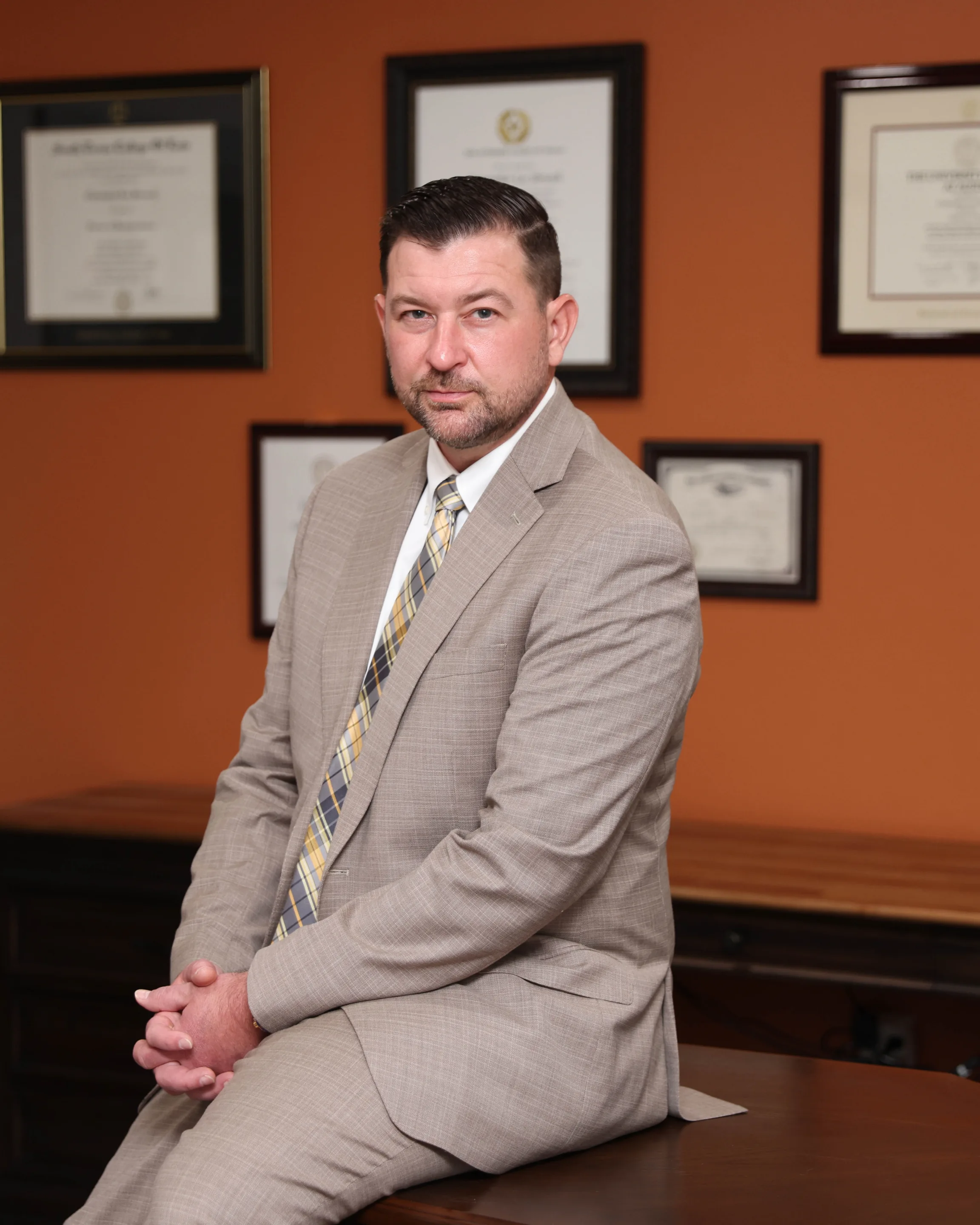
Chris Sbrusch is a lifelong East Texan and founder of PINEYWOODS LAW™. He earned his psychology degree from The University of Texas at Austin and his law degree from South Texas College of Law Houston. With experience on both sides of personal injury litigation, he has served as lead attorney on more than 3,000 case resolutions and is licensed in the U.S. District Court for the Eastern District of Texas.
Website developed in accordance with Web Content Accessibility Guidelines 2.2.
If you encounter any issues while using this site, please contact us: 936-300-1200
Se Habla Español
Se Habla Español